Channel 3 Was a Lifestyle: The Forgotten Art of Hooking Up a Console to a Tube TV
Somewhere in a landfill in Ohio, there's an RF switchbox that spent the Reagan years duct-taped to the back of a Zenith. It deserves a plaque.
If you grew up in the '80s or '90s, you didn't just play video games. You installed them. Every session began with a small act of engineering, a negotiation between plastic, coaxial cable, and a television set so heavy it doubled as furniture. Getting Mario on screen wasn't a given. It was earned.
And honestly? Part of me misses it.
The Ritual of the Blue Screen
The modern setup takes eleven seconds. HDMI cable in, input select, done. It's frictionless, which is another way of saying it's forgettable.
The old way had stages.
First, the TV had to be tuned to channel 3. Not 2, not 4 — well, okay, sometimes 4, if 3 was being bullied by a local broadcaster's signal bleeding through. But channel 3 was the sacred default, the password to another world. Kids who moved to a new house had to re-learn the channel 3 situation of a whole new television, like immigrants learning local customs.
Then came the RF adapter — that little metal box that let the console's signal ride into your TV through the antenna screws. If your family was fancy and had a cable box, congratulations: now the adapter had to chain through that, and God help you if someone wanted to watch the Braves game afterward. Every gaming session ended with re-routing cables like you were defusing a bomb in reverse.
The Troubleshooting Ladder
Here's the part that I think actually made us smarter: when it didn't work, we had a protocol. Nobody taught it to us. We just knew, the way kids today know how to swipe.
The ladder went roughly like this:
- Check the channel. Is the TV on 3? It's always 3. Someone changed it to watch the news.
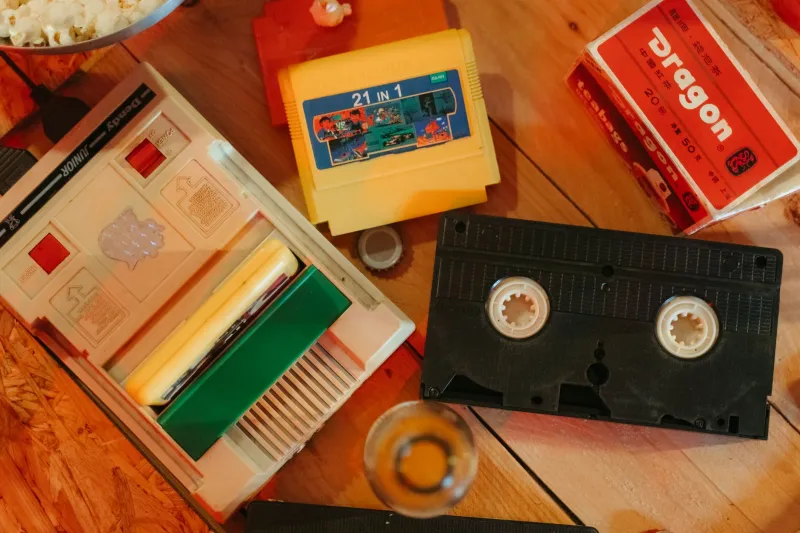
- Reseat the cartridge. Pull it out, blow into it with the confidence of a surgeon, jam it back down with your palm.
- The wiggle. Gently rock the cartridge left to right while the power is on. (Yes, this was dangerous. No, we did not care.)
- Adjust the fine tuning dial. The picture is there, it's just rolling or snowy — a half-turn of that dial and the image would lock in like a combination safe.
- The percussive maintenance stage. A flat whack to the side of the set, calibrated by feel. Too soft did nothing. Too hard introduced a new problem. Somewhere in the middle was salvation.
- The antenna check. Sometimes the TV's own rabbit ears fought the console signal, and someone had to stand there holding a metal pole in a specific position for two hours while their sibling played Duck Hunt.
That last one deserves its own support group.
Blowing Into Cartridges: Folk Medicine That Somehow Worked
Let's address the sacred cow: blowing on NES cartridges didn't really fix anything. The actual culprit was the connector pins wearing out, and moisture from your breath probably made the corrosion worse over time. Nintendo even put warnings in the manual telling us to stop.
We did not stop.
But here's the thing — the blowing wasn't really about the contacts. It was a loading screen. It was the moment of transition between the frustration of a gray screen and the promise of the title theme. You had a job to do, you did the job, and the game rewarded you with the Konami logo. Modern consoles boot in two seconds and feel like nothing. The ritual was the point.
What We Actually Lost
I'm not arguing that hooking up an HDMI cable should require a certification. Convenience is good. My back is grateful that TVs no longer require two people and a dolly to reposition.
But there was a real, small mastery in the old way. You understood your gaming setup at a physical level — where the signal came from, why it broke, which of its moods responded to which fix. A ten-year-old in 1989 was functionally an AV technician, and felt the specific pride that comes with that.
Kids today get that feeling from other things, probably. Building in Minecraft, maybe. Setting up a Discord server. The medium changes; the itch to understand the machine doesn't.
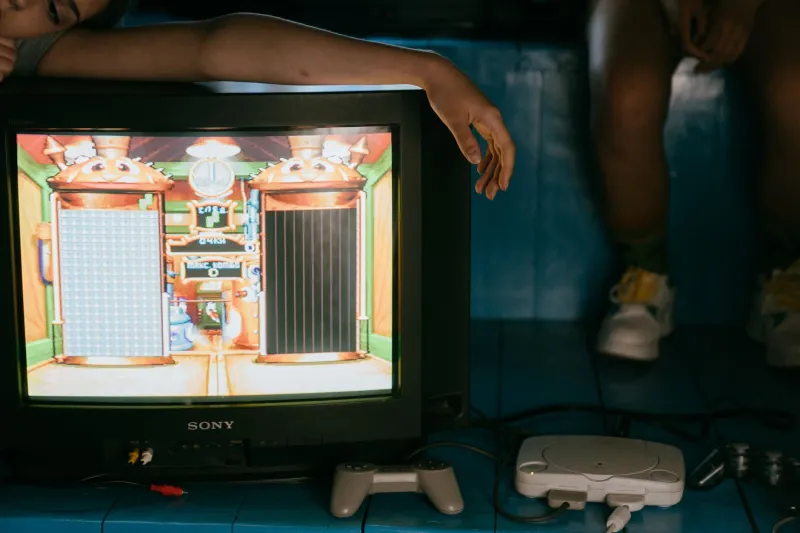
Still, there's a reason retro gamers chase CRT televisions now, hauling 40-pound Sonys out of Facebook Marketplace listings like they're rare artifacts. It's not just the scanlines or the zero input lag. It's that the old TVs demanded something from you. They made the games feel like an event you'd assembled by hand.
The final boss of childhood gaming wasn't Bowser. It was the back panel of a tube TV — and we beat it every single time.