Still Breathing: The Stubborn Logic of Rescuing a Game Boy That Should've Stayed Dead
There's a specific kind of guilt that comes with pulling a broken Game Boy out of a storage bin. It's not quite grief, not quite regret — it's something in between. You recognize the device. You remember exactly how the hinge on the GBA SP felt when it clicked open. You know the scratch on the corner came from a specific camping trip in 2001. And now it won't turn on, and you're standing in your garage wondering if you're the kind of person who fixes things or the kind of person who lets them go.
For a lot of us, the answer has become: neither. We keep them. Broken. Indefinitely. Just in case.
But a growing slice of the retro gaming community is moving past that limbo and into something more intentional — actual restoration. And the price tags involved would make your practical side flinch.
What We're Actually Talking About
Before we get into the psychology, let's be honest about the math. A used Game Boy Color in working condition can be found for $40 to $70 on eBay on any given week. A Game Boy Advance SP — one of the most beloved handhelds ever made — regularly sells for $60 to $100 depending on condition and color.
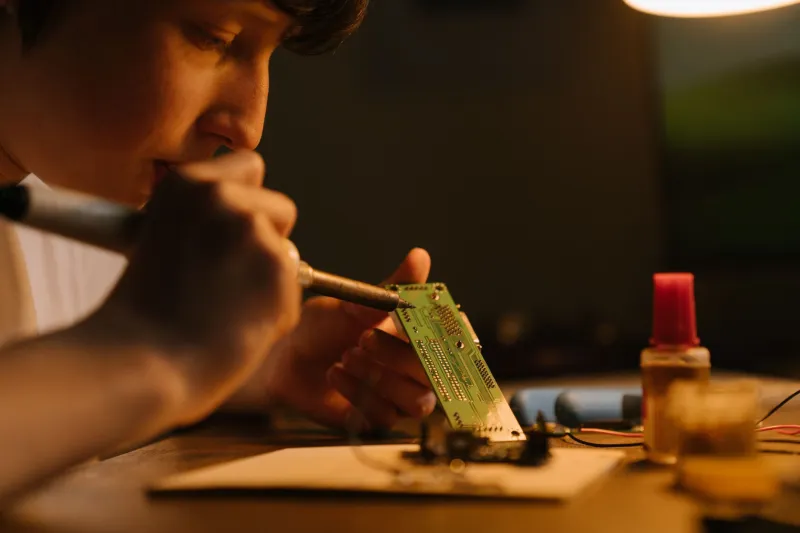
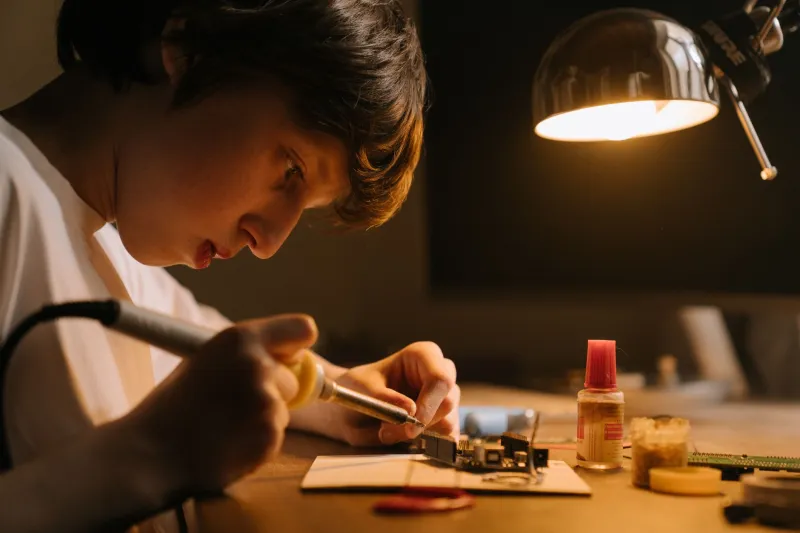
Now consider what it costs to restore a dead one. A professional backlight IPS screen replacement for a GBA SP runs anywhere from $50 to $120 in parts alone, not counting labor if you're not doing it yourself. Recapping the board, replacing the battery, resoldering corroded connections — you can easily clear $150 to $200 on a device that, on the open market, is worth half that.
And people are doing it anyway. A lot of them.
"I paid more to fix mine than I could've bought a clean one for," admits Derek Callahan, a 38-year-old IT manager from Columbus, Ohio, who spent three months and roughly $180 restoring a GBA SP that belonged to him as a kid. "My wife thought I was losing it. But I couldn't explain to her why buying a different one wasn't the same thing. It just wasn't."
The Object Isn't the Point — The History Is
Psychologists have a term for what Derek is describing: object attachment. It's the phenomenon where meaning gets transferred onto a physical item not because of what it is, but because of what it witnessed. Your Game Boy didn't just play Pokémon Gold — it played your Pokémon Gold, during your summer, in your bedroom, with your choices saved on that battery-backed cartridge.
Replacing it with a functionally identical unit doesn't restore what you actually lost. It just gives you a working piece of hardware with no history.
Lauren Osei, a collector based in Atlanta who runs a small Game Boy restoration side business, says she hears this constantly from customers. "People come to me with devices that are genuinely trashed — like, corrosion everywhere, cracked housing, missing battery cover. And they still want that one fixed. Not a replacement. That specific one." She pauses. "The first thing I ask now is whether it has sentimental value. Because if it does, the economics don't really apply."
Lauren charges between $80 and $160 for full restorations depending on the model and damage involved. She's booked out six weeks.
When the Repair Actually Makes Sense
Setting emotion aside for a second — because not every broken handheld carries a childhood backstory — there are cases where restoration is genuinely the smarter financial move.
Limited-edition and regionally exclusive models are the obvious example. A Pokémon Center edition GBA or a Japan-exclusive Game Boy Pocket color variant isn't something you can just pick up as a clean replacement. The supply is fixed. Restoration, even expensive restoration, preserves something that can't be reproduced.
There's also the modding angle. If you're going to invest in an IPS screen swap and a new shell anyway — upgrades that make the original hardware significantly better than stock — then using your own device as the base isn't sentimental, it's practical. You're building something custom, and your original unit is just the starting point.
Marcus Webb, a 44-year-old from Portland who's been modding Game Boys for about five years, sees it this way. "I think people conflate restoration with preservation," he says. "Preservation is keeping something exactly as it was. Restoration — especially with modern parts — is more like upgrading. You're making something better than it ever was. And if you're doing that, it doesn't really matter if it's your childhood unit or one you bought for $15 at a thrift store."
The Ones That Can't Be Saved
Not every broken Game Boy has a happy ending, and that's worth saying plainly.
Some units have damage that goes beyond what's economically or practically repairable. Severe water damage. Cracked circuit boards. Corroded battery contacts that have eaten through traces. In these cases, the kindest thing — and the hardest thing — is acknowledging that the device is done.
What collectors often do in these situations is part them out. A dead unit with a good screen, good buttons, and intact housing becomes a donor for another restoration. The object doesn't survive, but its components keep something else alive. It's a strange kind of recycling, and more than a few people in the community find it genuinely comforting.
"I kept the shell from my original Game Boy," says Derek, the IT manager from Columbus. "The board was too far gone. But the shell is sitting on my desk. I know that sounds weird. It probably is weird. But it's still something."
What This Says About Us
There's a version of this conversation that's about electronics, and there's a version that's about something bigger. The reason so many adults are willing to spend more money than makes sense to fix a 30-year-old handheld is the same reason people restore old cars, refinish inherited furniture, and keep their parents' watches running long past the point of practicality.
We're trying to hold onto time. Not literally — we know that's not how it works. But the physical object creates a kind of tether. It's proof that the memory is real, that the version of you who played Tetris for four hours in the backseat of your family's minivan actually existed.
A replacement unit doesn't give you that. It gives you a working Game Boy. Which is fine. Which is actually great. But it's not the same.
HomeCade exists because we believe that old games and old hardware carry something that new releases can't manufacture — lived-in meaning, accumulated history, the specific weight of things that mattered to you before you knew what mattering felt like.
So yeah. Fix the Game Boy. Even if it costs more than it should. Some things aren't about the math.