Dead Pixels and Second Chances: The Case for Fixing Your Old Game Boy Instead of Buying Another One
There's a specific kind of grief that hits when you dig out a childhood Game Boy, pop in four AA batteries, and get nothing. No jingle. No pixel flash. Just silence and that faint smell of old plastic. Most people shove it back in the box. A growing number are taking it to someone who can bring it back.
The repair and restoration scene around original Nintendo handhelds has quietly exploded over the last several years, driven by a mix of nostalgia, collector culture, and a genuine philosophical shift in how people think about old hardware. This isn't just about saving a few bucks. For a lot of folks, fixing the actual device they grew up with has become something closer to a personal mission.
The Real Cost of "Just Buying Another One"
Here's the thing people don't always calculate before hitting eBay: replacement isn't cheap anymore. A working original Game Boy in decent cosmetic shape regularly sells for $50 to $80. A Game Boy Color in good condition? You're often looking at $70 to $100. The Game Boy Advance SP — arguably the pinnacle of the line — has crept well past the $100 mark for clean examples, with IPS-modded versions pushing $150 to $200 or more.
Meanwhile, a lot of common Game Boy problems are genuinely fixable without spending that kind of money. Dead capacitors, corroded battery contacts, scratched lenses, busted speakers — these are the kinds of issues that make a unit look dead but don't mean the hardware is gone. A set of replacement capacitors costs a few dollars. A new lens kit runs under $10. Battery contact cleaning is free if you've got vinegar and a cotton swab.
Even more involved repairs — screen replacements, new shells, speaker swaps — often come in well under the cost of a replacement unit, especially if you're doing the work yourself or finding a local tech who works on vintage electronics.
The People Keeping These Machines Alive
Walk into any retro gaming forum or subreddit and you'll find them: the folks who've turned Game Boy restoration into a genuine craft. Some are hobbyists who started fixing their own stuff and gradually became the neighborhood expert. Others have turned it into a small business, running repair queues out of their garages or home offices.
What's striking about this community is how seriously they take documentation and knowledge-sharing. Detailed repair guides, component lists, solder joint diagrams — all of it freely shared across platforms like Reddit's r/Gameboy, YouTube tutorial channels, and Discord servers dedicated to specific hardware generations. The institutional knowledge being built around 30-year-old consumer electronics is genuinely impressive.
For the more advanced practitioners, restoration has evolved into something closer to artisanship. IPS screen installations require precision work inside tight housings. Custom shell painting and hydro-dipping have turned beat-up gray bricks into one-of-a-kind pieces. Some modders are combining original boards with modern shells, creating hybrids that preserve the authentic feel of the original hardware while adding features Nintendo never shipped — better screens, rechargeable batteries, backlit buttons.
These aren't just functional repairs. They're restorations with a point of view.
Why Original Hardware Matters
You can play Game Boy games a dozen different ways in 2024. Emulators on your phone. Virtual Console libraries. Fan-made ports. The ROM preservation scene has made it so that almost no title is truly inaccessible. So why does anyone bother with the original hardware at all?
Ask someone who's deep in the restoration hobby and you'll get a few different answers, but they tend to orbit the same idea: it just doesn't feel the same otherwise.
Part of that is tactile. The weight of the original DMG Game Boy. The specific travel of those face buttons. The sound that comes out of a working speaker rather than a phone's tinny output. These are things emulation genuinely can't replicate, and for people who grew up with this hardware, those physical details are loaded with memory in a way that's hard to explain but easy to feel.
There's also a preservation argument that goes beyond personal sentiment. Original cartridges and hardware represent a physical record of a specific moment in consumer technology. When those devices disappear — when they get tossed because the screen went out or the speaker crackled — something real is lost. The repair community is increasingly vocal about this, framing their work not just as a hobby but as a form of cultural conservation.
Nintendo isn't making more of these. The factories that produced original DMG components shut down decades ago. Every working unit that gets restored rather than landfilled is one more piece of that history that survives.
What to Expect If You Want to Restore Yours
If you've got a dead or struggling Game Boy sitting around and you're thinking about restoration rather than replacement, here's a realistic picture of what you're getting into.
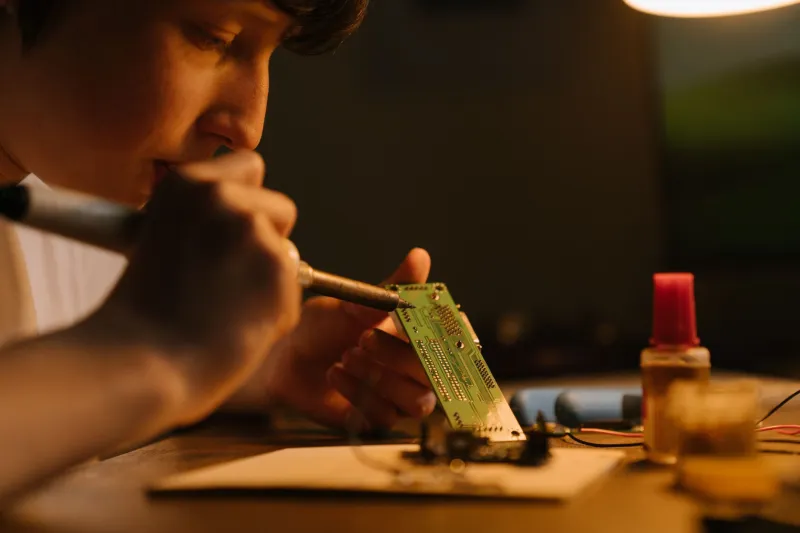
DIY repair is absolutely accessible if you're comfortable with basic electronics work. You'll need a tri-wing screwdriver (standard screwdrivers won't open Nintendo hardware), and a soldering iron is necessary for anything beyond cosmetic fixes. There's a learning curve, but the community resources are genuinely excellent and most common repairs are well-documented with step-by-step guides.
If you'd rather have someone else do the work, local repair options are more available than you might think. Search for vintage electronics repair shops in your area, or check retro gaming Facebook groups and subreddits for technicians who take commissions. Expect to pay $30 to $80 for common repairs depending on complexity, which still often comes in under replacement cost once you factor in shipping on a used unit.
For screen upgrades specifically — the most popular mod right now — an IPS kit and professional installation can run $60 to $100 total, but the result is a device that's genuinely better to use than the original ever was. Brighter, sharper, no ghosting. It's a strange thing to describe a 35-year-old handheld as improved, but here we are.
The Shoebox Doesn't Have to Be a Graveyard
There's something almost defiant about the Game Boy restoration community. In an era where the default response to a broken device is to recycle it and order a new one, these people are choosing the slower, more deliberate path. They're learning how the hardware works. They're sourcing components. They're putting in the hours.
And at the end of it, they've got something a brand-new device can't give them — the actual thing, fixed. The same unit that went with them on road trips and survived a thousand dead batteries and probably got dropped more times than anyone would admit.
If you've got one of those sitting in a drawer somewhere, it might be worth finding out what's actually wrong before you write it off. Chances are, it's more fixable than you think.