These Games Ended Friendships — Here's Why You Should Boot Them Up Again
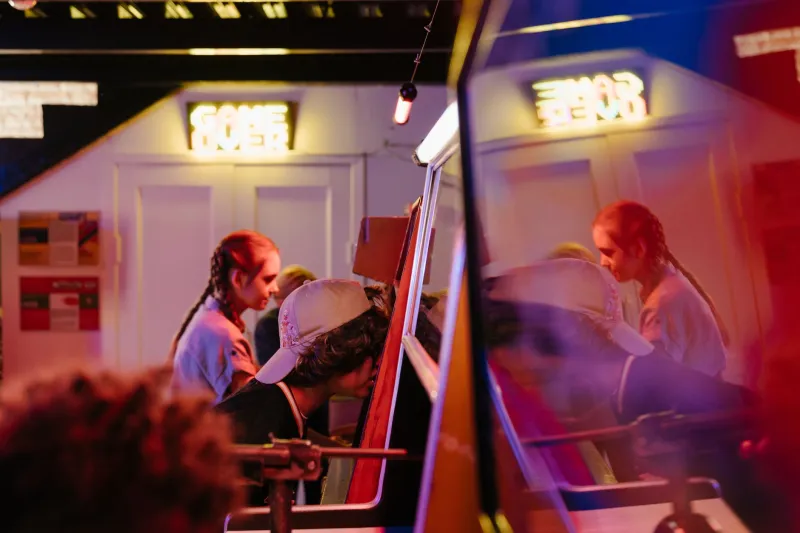
There's a specific kind of silence that falls over a living room after someone rage-quits. Not peaceful silence. The kind where you can hear the hum of the television and the slow creak of someone standing up from the floor, controller cord dangling, dignity somewhere on the carpet. If you grew up gaming in the late '80s or '90s, you know that silence. You probably caused it at least once.
Certain games had a gift for turning casual hangouts into diplomatic incidents. They didn't mean to. Or maybe they did. Either way, some of the most beloved titles from the arcade and home console era were basically social grenades — pull the pin, press start, and watch the chaos unfold. The question worth asking now, as adults with slightly thicker skin and hopefully better impulse control, is whether those games hit different when you go back.
Spoiler: they do. Just not always in the way you'd expect.
The Usual Suspects
Let's name names. Street Fighter II is probably the most iconic friendship-ender in arcade history. When it landed in arcades in 1991 and then exploded onto the Super Nintendo in 1992, it introduced an entire generation to the concept of "cheap moves." The Hadouken. The endless Chun-Li leg loop. Guile's sonic boom spam from the corner. Every neighborhood had that one kid who'd discovered a single technique and would deploy it relentlessly, wearing the same expression a chess prodigy might use while dismantling a first-grader.
The thing is, Street Fighter II is actually a game of deep, almost perfect information. Every character's moves are knowable. Every matchup has a counter. The problem wasn't the game — it was the skill gap, and more importantly, the complete unwillingness of certain players to acknowledge that gap existed. Losing to a Blanka who just mashed electricity for three rounds didn't feel like a skill deficit. It felt like a personal attack.
Then there's Mario Kart 64. Whole different animal. Where Street Fighter II at least rewarded mastery, Mario Kart introduced something arguably more sinister: rubber-band AI and blue shells designed to punish whoever was doing the best. You could be running a flawless race, executing every shortcut, and then a blue shell would arc across the screen like a heat-seeking missile aimed specifically at your self-esteem. The game didn't just let other players beat you. It actively conspired against you. Friendships cracked under that particular brand of injustice.
GoldenEye 007 on the N64 deserves its own paragraph. Four-player split-screen should have been a triumph of communal gaming. And it was — right up until someone discovered the proximity mines, or started using Oddjob (universally agreed upon, in households across America, to be a war crime). The combination of tiny character model, split-screen peripheral vision, and the raw competitiveness of teenage boys made GoldenEye sessions feel less like gaming and more like psychological warfare.
Why Did These Games Hit So Hard?
Part of it is just the intensity of adolescent emotion. Everything felt higher-stakes at 14. Losing a match wasn't just losing a match — it was a referendum on your intelligence, your coordination, your worth as a human being. Gaming was one of the primary arenas where social hierarchies got established and challenged, and nobody wanted to be the kid who always lost.
But the games themselves deserve some credit (or blame) for the design choices that amplified that tension. The best competitive games of that era were built around what game designers call "feel" — the immediate, visceral satisfaction of a well-timed move or a perfectly landed hit. That same responsiveness made failure feel equally immediate and visceral. You didn't just lose. You felt yourself losing, frame by frame.
There's also the fact that most of these games offered no real exit ramp. No difficulty scaling mid-match, no matchmaking algorithm pairing you with someone at your level. You played whoever was in the room. If your older cousin had been grinding Street Fighter at the 7-Eleven for six months and you'd only played it twice, that was your problem. Adapt or go home.
What Happens When You Go Back
Here's the thing nobody tells you about revisiting these games as an adult: the rage is still there. It doesn't fully go away. The first time a blue shell takes you out in the final lap of Rainbow Road, something ancient and primal flickers back to life in your chest. Muscle memory is real, and so is emotional memory.
But something else happens too. The games feel more honest now. Street Fighter II, played with a little distance and maybe a beer in hand, reveals itself as genuinely elegant. The move sets are tight. The character balance, while not perfect, is thoughtful. What felt like cheap exploitation at 13 looks more like someone just understanding the system better than you did. That's actually kind of admirable in retrospect.
Mario Kart's chaos, which once felt like a betrayal, now reads as a feature. The whole point was always to keep races close and give everyone a chance, which is a pretty generous design philosophy when you think about it. The blue shell isn't punishing excellence — it's keeping the party going. Hard to stay mad at that when you're not twelve and your ego isn't riding on every finish line.
GoldenEye, if you can track down a working N64 and four controllers, becomes something genuinely warm. The graphics are rough by modern standards, sure. The frame rate is a slideshow in certain rooms. But the laughter that comes with those sessions now is different — looser, less loaded. When someone pulls out Oddjob, it's a callback instead of a crisis.
The Real Reason to Play Them Again
Nostalgia is part of it, obviously. That's kind of HomeCade's whole thing. But there's something more specific going on with these particular games. Going back to the titles that once caused real friction is a way of reclaiming them — of playing the same game with a different version of yourself at the controls.
You're not trying to re-litigate old losses. You're not trying to finally prove something to a friend who probably doesn't even remember the argument. You're just pressing start again, older and (marginally) more chill, and discovering that the games were never really the problem.
The intensity was always you. Which, honestly? Makes sense. That's what made it matter.
Find someone who used to beat you at Street Fighter II. Invite them over. Set up the SNES. And this time, when you lose, try laughing about it.
It's a surprisingly good feeling.