Controllers Down, Friendships Tested: The Honest Verdict on Classic Multiplayer Games
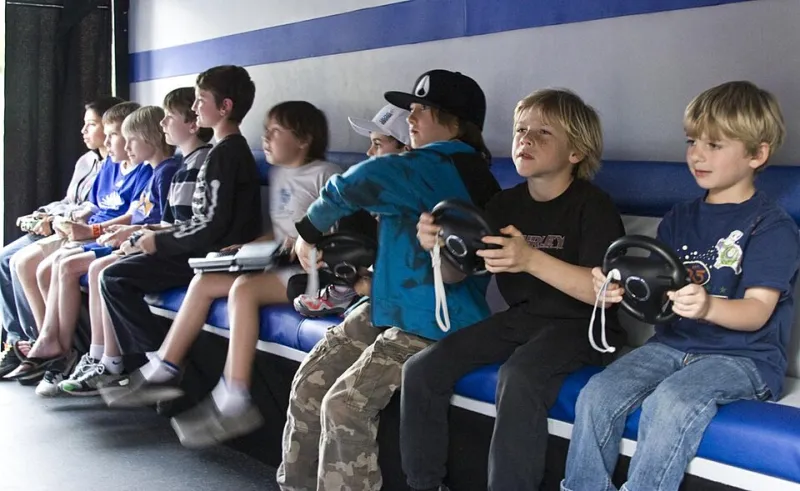
Photo: Gamesingear, CC BY-SA 3.0, via Wikimedia Commons
There's a very specific kind of rage that only retro gaming can produce. It's not the frustrated-at-yourself feeling of a difficult solo game. It's the hot, personal kind — the kind where you're staring across the couch at someone you genuinely like and thinking, I cannot believe you just did that. Classic multiplayer games had a gift for manufacturing that feeling, and honestly? Some of them still do.
We went back through the archives — the cartridges, the controllers, the memories — and gave a brutally honest assessment of which couch co-op and versus games from the 8-bit and 16-bit golden age still deliver genuine fun, and which ones have quietly become relics best left in the past.
The Ones That Still Absolutely Slap
Street Fighter II Turbo (SNES) isn't just playable in 2024 — it's still good. Like, embarrassingly good for something that's over 30 years old. The controls are tight, the character variety holds up, and there's enough depth that a casual match between two people who haven't touched it in a decade can still produce moments of genuine skill. One reader, Marcus from Columbus, Ohio, put it perfectly: "My brother and I played this at Thanksgiving last year. We're both in our 40s. I threw a controller. No regrets."
Tecmo Super Bowl (NES) is another one that defies expectations. Football video games have evolved into near-simulation territory, but Tecmo Super Bowl's stripped-down arcade approach means there's zero learning curve and maximum chaos. Bo Jackson is still broken. The AI is still beatable. It's still a great time.
Mario Kart 64, while technically N64 and not strictly 8 or 16-bit, gets an honorary mention here because its design philosophy is pure 16-bit chaos — rubber-band AI, item luck, and the eternal injustice of getting hit by a blue shell on the final turn. It creates drama the way good multiplayer always should: unpredictably and personally.
The Ones That Felt Great Then and Feel Rough Now
Here's where things get honest. Nostalgia is a powerful filter, and it's been quietly covering up some real problems.
Double Dragon (NES co-op) was a landmark game. It was one of the first side-scrolling beat-em-ups to offer two-player simultaneous action, and in 1987 that was genuinely revolutionary. In 2024, it's a slog. The controls feel like you're wrestling the game rather than the enemies, the hit detection is inconsistent, and — this is the one that still stings — player two can't even join until player one loses a life in the original NES version. That's not co-op. That's a waiting room with a controller.
NBA Jam (SNES/Genesis) is a trickier case. The core "he's on fire" energy is still there, and the two-on-two format is genuinely fun for a few games. But the AI difficulty scaling is wild and poorly balanced, and if one player is significantly better than the other, the experience falls apart fast. Reader Janelle from Atlanta told us she tried introducing it to her younger coworkers: "They thought it was fun for about fifteen minutes, and then they just wanted to play 2K. I felt personally attacked."
Battletoads (NES) deserves its own paragraph. The co-op mode in Battletoads is, by most accounts, one of the most friendship-threatening designs in gaming history — and not in a fun way. The infamous Turbo Tunnel section is punishing enough in single-player. In co-op, where players can damage each other, it becomes something closer to a stress test for a relationship. One reader described it as "the game that taught me what my actual limits were." We'll leave it at that.
The Surprise Survivors
Some games you don't expect to hold up actually do, quietly and without fanfare.
Bomberman (NES/SNES) is one of the cleanest multiplayer designs ever committed to a cartridge. Simple rules, spatial strategy, and the deeply satisfying ability to trap your best friend in a corner and watch them realize what's about to happen. It translates perfectly to modern play because the concept is timeless. Blow stuff up. Don't blow yourself up. Last one standing wins.
Contra (NES) in co-op still works, though it requires a very specific kind of partnership — one where both players accept that they will absolutely get each other killed, probably multiple times, and nobody is allowed to be weird about it. If you can clear that emotional bar, it's a blast.
What Makes the Difference
Looking back at what separates the games that aged well from the ones that didn't, a few patterns emerge. Games with simple, readable rules tend to survive. Games where the multiplayer friction feels intentional — where chaos is the point — hold up better than games where the friction is just bad design pretending to be challenge.
The games that nearly ended friendships back in the day weren't always the ones with the worst mechanics. Sometimes they were the ones where the power imbalance between two players was too stark, or where losing felt arbitrary rather than earned. That kind of experience doesn't get better with age — it just gets more obvious.
The Verdict
If you're planning a retro game night and want to actually enjoy yourself, Street Fighter II, Bomberman, and Tecmo Super Bowl are safe bets. They're fun, they're fair, and they produce the right kind of competitive energy. Double Dragon and Battletoads are better experienced as curiosities — play them for the nostalgia hit, but don't expect them to carry a whole evening.
And whatever you do, don't let anyone suggest Battletoads co-op as a "fun way to spend the afternoon." Some friendships are worth protecting.