So You Want an Arcade Cabinet: The Real Numbers Behind Owning a Piece of Gaming History
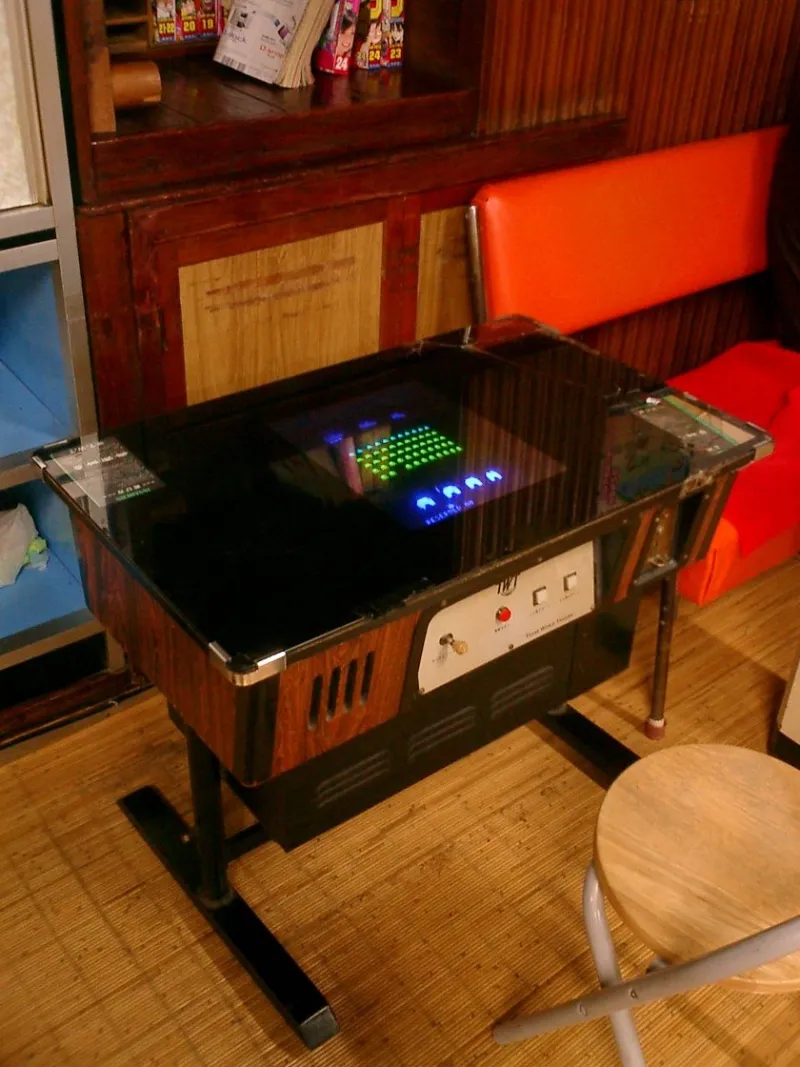
Photo: Tomomarusan, CC BY 2.5, via Wikimedia Commons
Owning a real arcade cabinet — the actual machine, not a mini replica or a TV with a USB stick — is one of those bucket-list items that sounds incredible until you start doing the math. Between acquisition costs, shipping nightmares, restoration bills, and the eternal question of where exactly a 300-pound cabinet is going to live, the dream gets complicated fast. Here's what nobody tells you before you pull the trigger.
Let's get into it.
What You're Actually Buying
Before we talk numbers, it helps to understand what the market actually looks like. Arcade cabinets fall into a few broad categories, and each one comes with a different cost profile.
Original dedicated cabinets are the real deal — a machine built specifically for one game, with artwork and hardware designed for that title. Think a Pac-Man cocktail table, an upright Donkey Kong, or a Street Fighter II cabinet. These are what most people picture when they say they want an arcade machine.
Multicade conversions are original cabinets that have been modified (sometimes beautifully, sometimes butchered) to run multiple games, usually through a JAMMA board or a MAME setup. They're generally cheaper than pristine dedicated units and more practical for home use, but purists will side-eye them.
Cocktail cabinets are the horizontal table-top style machines that let two players sit across from each other. They take up less vertical space than uprights and double as actual furniture, which makes them popular with people whose partners have strong opinions about the living room décor.
Candy cabs are the Japanese-market equivalents — machines like the Sega Aero City or the Taito Egret series — that have developed a serious following in the US collector scene for their build quality and clean aesthetic.
The Acquisition Cost: Brace Yourself
Prices have moved significantly over the last decade, and COVID-era nostalgia buying pushed them even further. Here's a rough breakdown of what you're looking at in today's market:
-
Common titles in fair condition (Galaga, Ms. Pac-Man, Centipede): $400–$900. These are the workhorses of the arcade collecting world. Plentiful enough that deals exist, popular enough that prices don't collapse.
-
Common titles in excellent or restored condition: $1,200–$2,500. A clean, fully working Pac-Man with original artwork and a sharp CRT is not a cheap proposition.
-
Desirable mid-tier titles (Mortal Kombat, Street Fighter II, NBA Jam): $800–$2,000 for working units, more for clean examples.
-
Premium and rare titles (Dragon's Lair, Tron, Defender, early Nintendo uprights): $2,000–$8,000+. Dragon's Lair in particular commands serious money because of the laserdisc hardware, and finding one that actually works is half the battle.
-
Japanese candy cabs: $600–$2,500 depending on model and condition, but factor in import costs if you're sourcing from Japan directly.
These numbers assume you're buying from a private seller through Craigslist, Facebook Marketplace, or an arcade-specific forum like Klov (the Killer List of Videogames). Buying from a restoration shop or a dedicated arcade reseller adds a premium — sometimes a significant one — but you get the peace of mind of a tested, vetted machine.
The Part Everyone Underestimates: Getting It Home
Here's where the budget really starts to breathe fire. A full-size upright arcade cabinet weighs between 200 and 350 pounds and stands roughly six feet tall. It does not ship like an Amazon package.
If you're buying locally and have a truck and a couple of willing friends, you might escape this problem for the cost of pizza and a case of beer. But "locally" in the arcade world often means a four-hour drive, and the cabinet you really want might be in a different state entirely.
Freight shipping for a single cabinet typically runs $300–$700 within the continental US, and that's for curbside delivery — meaning the truck drops it at the end of your driveway and you figure out the rest. White-glove delivery that gets the machine inside your house can run $500–$1,200. And that's assuming the cabinet survives the trip without damage, which is never fully guaranteed regardless of how well it's packed.
Budget for shipping as a real line item, not an afterthought.
Restoration: The Money Pit Hiding in Plain Sight
Let's say you found a working Donkey Kong for $700. Great deal, right? Maybe. Depends on what "working" means.
Arcade machines are old. The CRT monitor — the original cathode ray tube display that gives these games their authentic look — may need a cap kit (capacitor replacement) to run safely. That's a $50–$200 DIY job if you're comfortable with electronics, or $150–$400 if you're paying a tech to do it. The monitor chassis itself can fail, and replacement or repair can run $100–$600.
The control panel artwork is often faded, scratched, or outright missing. Reproduction overlays are available for common titles and typically cost $30–$80. The side art is pricier — full reproduction side panel art can run $100–$250 depending on the title.
The PCB (the actual game board) may need work. Capacitors age, batteries leak, components fail. Board repair ranges from free (if you know what you're doing) to $100–$400+ at a specialist shop.
Power supplies, marquee lights, coin mechs, joysticks, buttons — everything has a lifespan and everything costs money to replace. A full restoration on a cabinet in rough shape can easily run $500–$1,500 on top of what you paid for the machine.
The Space Question Nobody Wants to Answer Honestly
An upright arcade cabinet is approximately 25 inches wide, 30 inches deep, and 66–72 inches tall. It needs clearance for the monitor to vent heat. It needs access to an outlet. It probably needs to be on a ground floor because nobody wants to carry 300 pounds up a staircase.
A dedicated game room or basement is the obvious solution, but that's not everyone's reality. Cocktail cabinets are more apartment-friendly, and some collectors have made uprights work in studio apartments through sheer force of will and very understanding roommates. Just go in with eyes open about the footprint.
The Alternatives Worth Taking Seriously
If the original hardware math isn't working for your situation, there are legitimate alternatives that don't feel like settling.
MAME cabinets — custom-built or converted uprights running the MAME emulation software — can deliver an authentic arcade experience for $300–$800 all-in if you're willing to build or source a conversion. You get the stick, the buttons, the cabinet aesthetic, and access to thousands of titles.
Arcade1Up machines are the obvious consumer-grade option. They're smaller than real cabinets, the controls aren't quite right, and they're not what a serious collector would buy — but for $250–$500, they put a recognizable arcade presence in a living room without the freight bill or the restoration rabbit hole.
New licensed reproductions from companies like Arcade1Up's "Legends" series or Raw Thrills offer full-size alternatives at $600–$1,500 that are turnkey and warranty-supported.
So Is It Worth It?
That depends entirely on what "worth it" means to you. If you want a conversation piece, a functional piece of gaming history, and a reason to host friends on a Friday night that doesn't involve a streaming service, an original arcade cabinet delivers something that no reproduction fully replicates. The weight of the thing. The sound of the original hardware. The exact feel of a 40-year-old joystick.
But go in with a realistic total budget. Add up the machine, the shipping, the likely restoration costs, and the space preparation. For a mid-tier title in good shape, you're probably looking at $1,500–$3,500 all-in to have something you're genuinely proud of. For a premium title in excellent condition, that number can double or triple.
Know your number before you start bidding. The deals are out there — but so are the money pits. Do the math first, then plug in and press start.