Cartridge Roulette: 5 NES Games You Probably Skipped That Are Absolutely Worth Playing
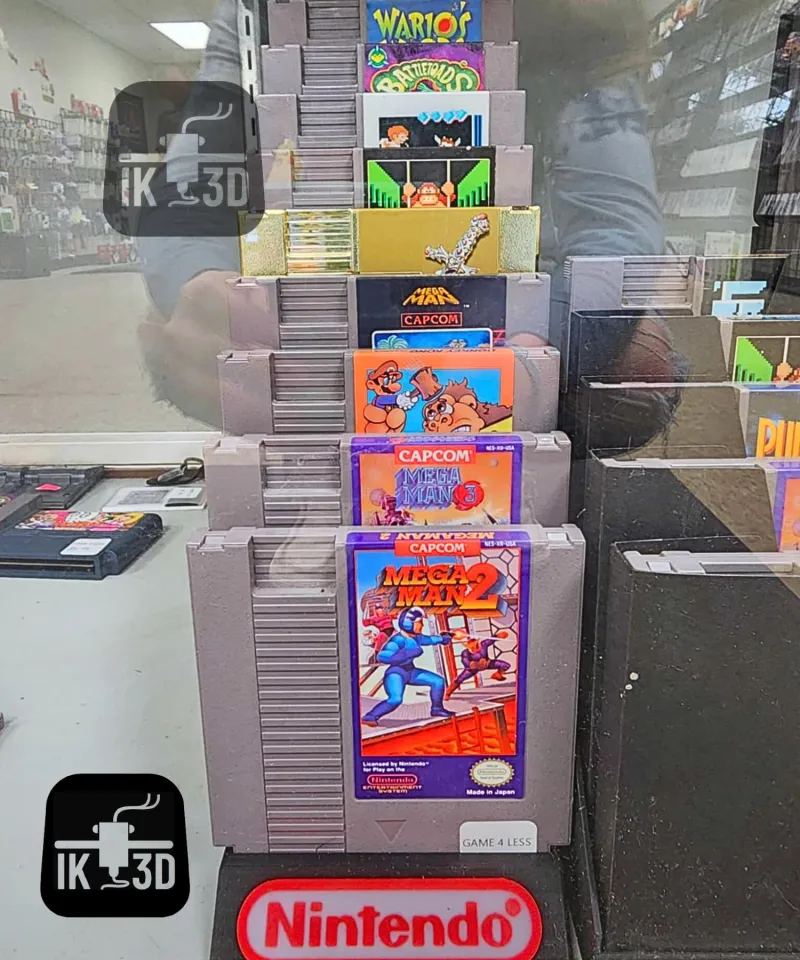
Photo: vintage NES cartridges collection on wooden shelf retro gaming, via i.etsystatic.com
There's a certain kind of Friday night that Gen X and millennial gamers remember with almost painful clarity. You're standing in the video game aisle at Blockbuster — or maybe a mom-and-pop rental shop if you were lucky — and Super Mario Bros. 3 is checked out. Again. So you scan the shelf. You grab something with cool box art. You take a gamble.
Sometimes that gamble paid off in ways you still think about decades later.
The NES library contains over 700 officially licensed titles for the North American market, and the vast majority of gaming coverage — then and now — gravitates toward the same two dozen games. That's understandable. Those games earned their reputations. But the shadow they cast is long, and it fell across some genuinely brilliant software that deserved way more attention than it ever got.
Here are five NES titles that slipped through the cultural cracks and absolutely hold up today.
1. Little Samson (1992)
Released in 1992, when most gamers had already mentally moved on to the Super Nintendo, Little Samson arrived at the worst possible commercial moment. Developed by Taito, it plays like a greatest-hits remix of everything the NES action-platformer genre did well — tight controls, gorgeous sprite work for the hardware, and a satisfying weapon system built around a bell that doubles as a projectile.
The game is so polished it almost feels like a tech demo showing what the NES could still do at the end of its life. Today, original cartridges sell for hundreds of dollars on eBay, which tells you everything about how collectors feel about it even if mainstream audiences never caught on.
"I found a copy at a flea market in Ohio when I was about twelve," recalls one HomeCade reader who goes by RetroRonnie_84. "I played it for two weeks straight and then could never find anyone who had heard of it. I thought I'd imagined the whole thing."
You didn't imagine it, Ronnie. It's real, and it's spectacular.
2. Crystalis (1990)
If someone handed you Crystalis without telling you who made it, you might assume it came out of the same creative pipeline as The Legend of Zelda. It has that same top-down action-RPG energy — a vast overworld, elemental sword mechanics, towns full of NPCs with actual things to say, and a post-apocalyptic story that swings harder than most NES narratives dared to.
SNK developed it, and it showed genuine ambition. The elemental magic system required players to actually think about which sword to equip based on enemy weaknesses, adding a layer of strategy that felt advanced for 1990. It got a Game Boy Color port years later, but the original NES version remains the definitive experience.
The tragedy of Crystalis is that it launched the same year as Dragon Warrior and Final Fantasy, two RPGs with significantly bigger marketing muscle. It got buried. That's gaming history's loss.
3. Startropics (1990)
Here's one that's technically a Nintendo first-party title, which makes its obscurity even more baffling. Startropics was developed by Nintendo's R&D3 team specifically for the North American market — it was never even released in Japan — and it plays like someone asked, "What if Zelda had a baseball bat and took place on tropical islands?"
You play as Mike Jones, a kid visiting his archaeologist uncle in the South Seas who ends up fighting alien invaders. The combat is satisfying, the dungeon design is clever, and there's a famous puzzle that required players to physically dip the included paper letter in water to reveal a code — one of the most inventive uses of pack-in materials in gaming history.
Startropics has a small but intensely loyal fanbase that has been campaigning for a sequel or remake for thirty years. Nintendo has not listened. This is one of gaming's quiet injustices.
4. Bionic Commando (1988)
Okay, some of you know this one — but a surprisingly large number of people who grew up in the NES era have never actually played it, and that needs to change.
Bionic Commando does something almost no other NES platformer does: it removes the jump button entirely. Your character moves through levels using a mechanical grappling arm that swings you across gaps and latches onto platforms above. The learning curve is real, but once it clicks, the movement system feels unlike anything else on the platform.
Capcom brought it stateside from an arcade original, and the localization team made some wild decisions — most notably replacing all references to Nazis with a fictional organization called the "Badds," while somehow still letting the final boss be a pretty obvious Hitler analog whose head explodes. It's a strange artifact of late-80s game localization that adds an unintentional layer of charm.
The gameplay, though? Timeless.
5. Vice: Project Doom (1991)
Imagine someone decided to combine a side-scrolling beat-em-up, a top-down driving shooter, and a first-person rail shooter into a single NES cartridge. That's Vice: Project Doom, and it somehow works.
American Samurai Games published this one, and it wears its influences proudly — you can feel shades of Ninja Gaiden in the wall-jumping mechanics and the cinematic cutscene storytelling. The story involves a cop named Hart uncovering a drug conspiracy with supernatural ties, which is exactly the kind of pulpy 90s action narrative that hits different when you're revisiting it as an adult.
"I rented this one from a gas station rental rack in rural Tennessee," says HomeCade reader CassetteDeck_Kim. "I didn't even finish it because I had to return it, and I spent years wondering what happened at the end. Finding out I could play it again through emulation genuinely made my week."
That experience — the half-finished rental, the lingering curiosity — is exactly why game preservation matters.
Why These Games Still Matter
There's a practical argument for revisiting overlooked NES titles: they're often cheaper to acquire than the heavy hitters, and the gameplay is frequently just as rewarding. But there's a bigger reason these games deserve attention.
The NES era produced an enormous volume of creative work under severe technical constraints. Most of that work was made by small teams with limited budgets and no guarantee anyone would ever notice. When we ignore the deeper catalog, we're leaving that creative history on the table — letting it fade because marketing budgets from 1990 still dictate what we remember in 2024.
Retro gaming communities, preservation projects, and platforms that make classic software accessible are doing genuinely important cultural work. And sometimes, the best way to honor that work is to grab a cartridge you've never heard of and give it a real shot.
The bottom shelf had some gems. Go find them.