The Glow-Up Is Real: How Adults Are Turning Spare Rooms Into Retro Gaming Shrines
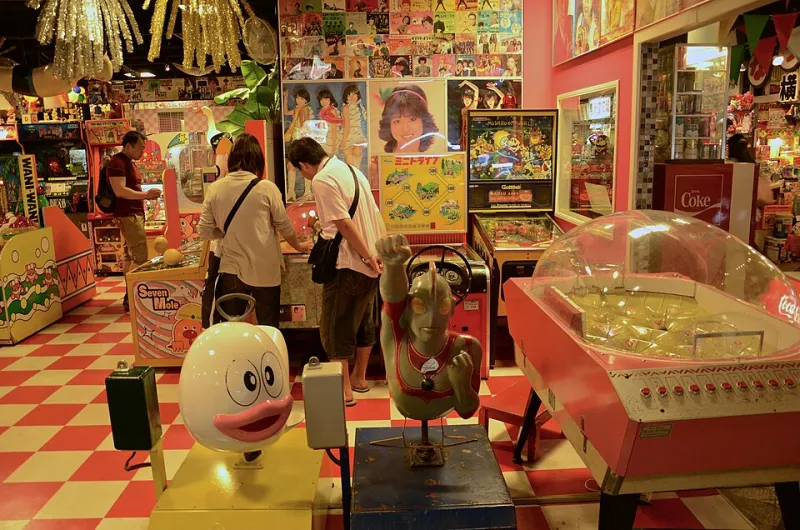
Photo: Stephen Kelly from San Francisco, CA, USA, CC BY 2.0, via Wikimedia Commons
Somewhere between the pandemic and the realization that adulthood comes with more disposable income than childhood ever did, a lot of millennials made a decision. They looked at that spare bedroom — the one collecting cardboard boxes and broken promises of a home office — and thought: what if this was an arcade?
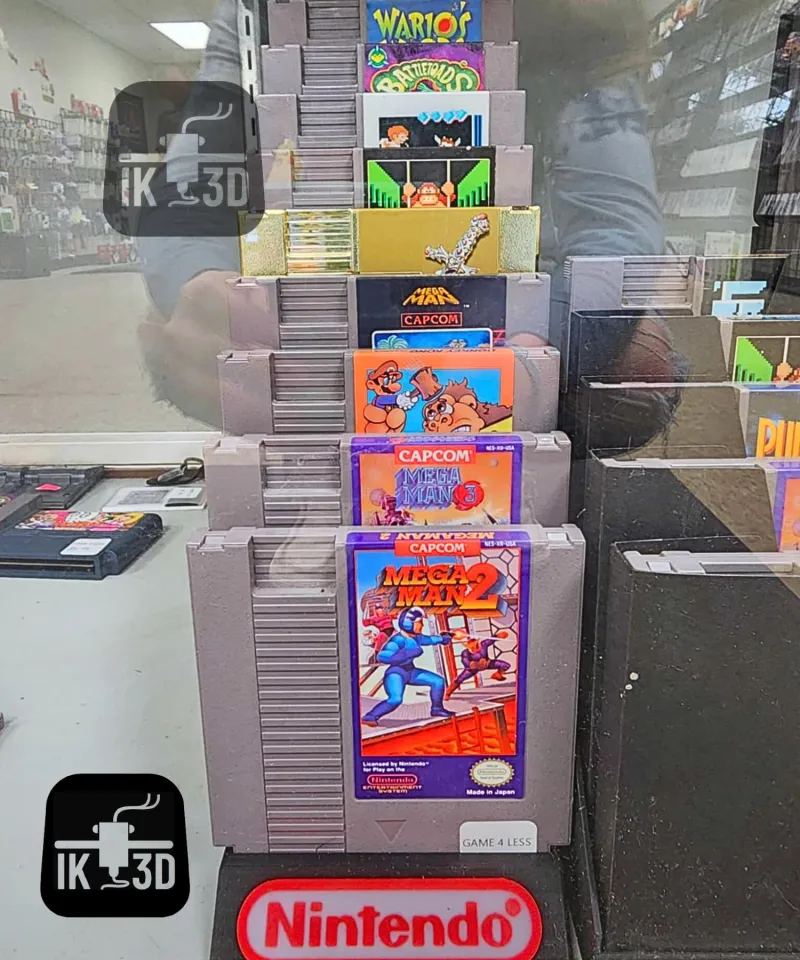
The retro game room isn't a new concept, but it's having a serious cultural moment in 2024. Walk through the right neighborhoods in Austin, Portland, or Columbus and you'll find homes where the basement or back bedroom has been transformed into something that looks like a cross between a 1987 Aladdin's Castle and a carefully curated art installation. CRT televisions stacked on custom shelving. Cartridge libraries organized with the precision of a vinyl record collection. And yes, sometimes a full-size arcade cabinet glowing in the corner like a neon altar.
This is the retro game room era, and it is thriving.
Why Now? The Psychology Behind the Setup
Social media gets some credit here — a well-lit retro gaming setup photographs beautifully and performs well on platforms like Reddit's r/retrogaming or Instagram. But collectors and enthusiasts say the motivation runs deeper than content creation.
"For me it was about reclaiming something," says Marcus T., a 38-year-old IT manager in the Chicago suburbs who spent three years assembling his setup. "When I was a kid, gaming was something I had to share — one TV in the living room, parents deciding when it was off. Now I have my own space, my own rules, and the games I actually want to play. There's something really satisfying about that."
Psychologists who study nostalgia have noted that intentional engagement with childhood memories — not just passive reminiscing but actively recreating environments — can produce genuine wellbeing benefits. For a generation that grew up with the NES, SNES, and Sega Genesis as cultural touchstones, building a space around those objects isn't escapism. It's more like homecoming.
The Anchor Piece: Finding Your CRT
Ask anyone who has built a serious retro setup and they'll tell you the same thing: it starts with the television. Specifically, a CRT.
Modern flat-panel displays introduce input lag that makes classic games feel sluggish and wrong. The scanlines produced by cathode ray tube televisions were a feature, not a bug — they're baked into how those games were designed to look. Playing Contra on a 4K OLED is like listening to a vinyl record through a Bluetooth speaker. Technically fine. Spiritually incorrect.
The good news is that CRTs are still findable. Facebook Marketplace, Craigslist, estate sales, and thrift stores regularly surface them, often for free or under $50. The bad news is that the good ones — specifically Sony Trinitron models, which collectors treat like sacred objects — have gotten harder to find and more expensive as word spread.
"I drove two hours to pick up a 27-inch Trinitron from a guy in rural Pennsylvania," says Deb R., a 41-year-old teacher who runs a retro gaming account online. "It weighed about 150 pounds. My husband still hasn't fully forgiven me. But the picture quality is genuinely stunning. Old games look the way they're supposed to look on that screen."
For people who can't find or haul a CRT, modern alternatives like the Analogue Pocket or RetroTINK upscalers can approximate the look on flat panels — and they're worth researching if you're working with limited space or mobility.
The Cabinet Question: Arcade at Home
Nothing signals commitment to the retro gaming lifestyle quite like a full-size arcade cabinet. They're also the most logistically complicated element of any home setup, which is part of why they've become a status symbol in the collector community.
Authentic vintage cabinets — original hardware, original artwork, original monitors — can run anywhere from a few hundred dollars for a beat-up cocktail table to several thousand for a restored upright in excellent condition. Prices vary wildly based on title, condition, and regional availability. Pac-Man, Donkey Kong, and Street Fighter II cabinets command premium prices because demand never cools off.
For those who want the aesthetic without the restoration project or the five-figure price tag, companies like Arcade1Up have built a solid business selling scaled-down replica cabinets at consumer-friendly prices. They're not the real thing, but they're genuinely fun, they look great in a setup, and they won't require you to source a 40-year-old monitor.
The third option — and one that's increasingly popular — is the custom MAME cabinet. Builders use modern hardware running emulation software inside a custom-built or repurposed cabinet shell. Done well, these can hold thousands of games and look completely authentic. There's an active DIY community around this approach, with detailed build guides available through forums and YouTube channels.
Making It Work in Small Spaces
Not everyone has a finished basement or a dedicated bonus room. Apartment dwellers and smaller-home owners have gotten creative.
Floating shelves do serious heavy lifting in compact setups — they display cartridge collections and console hardware without eating floor space. Under-bed storage drawers work well for overflow inventory. A single well-chosen piece, like a corner-mounted CRT on a custom bracket or a compact cocktail cabinet that doubles as a coffee table, can anchor a retro gaming aesthetic in a living room without overwhelming it.
Lighting matters more than most people expect. Neon signs, LED strips in warm amber or classic arcade blue, and backlit shelving all contribute to the atmosphere. Several HomeCade community members have noted that the right lighting can make even a modest setup feel immersive.
"I have a studio apartment in Denver," says Jordan K., 34. "My whole setup is one shelf unit, a 20-inch Trinitron, and four consoles. It takes up maybe six square feet. But when the lights are right and the CRT is on, it feels like its own world."
Budget Breakdown: What This Actually Costs
Retro gaming setups exist at every price point. A starter build — one CRT from Marketplace, one console with a handful of games, basic cable management — can come together for under $200 if you're patient and willing to dig.
A mid-tier setup with multiple consoles, a curated game library, proper shelving, and an Arcade1Up cabinet might run $800 to $2,000 depending on your choices and local market.
A full enthusiast build — restored original cabinet, premium CRT, complete console library, custom shelving, professional lighting — can easily reach $5,000 to $10,000 or beyond. At that level, it's less a hobby expense and more a genuine interior design investment.
The collecting community's consistent advice: buy slowly, buy intentionally, and prioritize the games and hardware you actually have personal history with. A setup built around games you love will always feel better than one assembled for aesthetics alone.
More Than a Room — A Statement
The retro game room trend says something interesting about where a generation has landed. After years of being told that gaming was a phase to grow out of, millennials and Gen Xers have quietly, deliberately built spaces that say the opposite. Gaming wasn't a phase. It was formative. It was — and is — worth honoring.
These rooms are memory palaces in the most literal sense. Every cartridge on that shelf, every controller on that hook, every pixel glowing on that curved glass screen represents something real: a Friday night, a summer afternoon, a version of yourself that found genuine joy in pressing start.
That's worth a spare bedroom. That's worth the drive to Pennsylvania for a television that weighs 150 pounds.
Plug in. Press start. Remember everything.