Why Anxious Overachievers Are Finding Peace in the Hardest Old Games They Can Find

Photo by Photo by Nik on Unsplash on Unsplash
Marcus is a 38-year-old project manager in Denver. His days involve back-to-back video calls, cascading deadlines, and the particular flavor of low-grade dread that comes with managing a team of twelve across two time zones. By 10 p.m., when his kids are asleep and his inbox has finally gone quiet, he doesn't scroll Instagram or decompress with Netflix. He fires up an emulator and runs Mega Man 2 from start to finish — trying, again, to shave a few more seconds off his personal best.
"It sounds counterintuitive," he admits. "But it's the only part of my day where I feel completely in charge of the outcome."
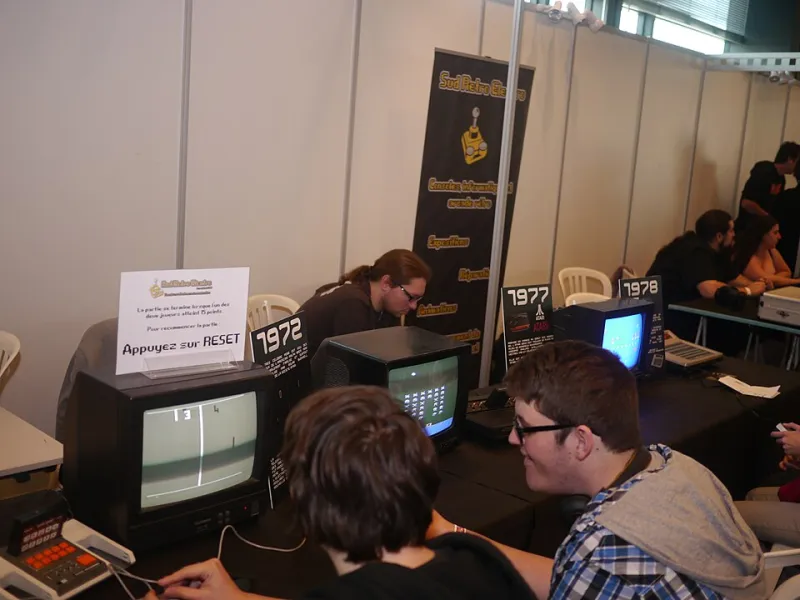
Marcus isn't alone. Across Reddit communities, Twitch streams, and Discord servers dedicated to retro gaming, you'll find a surprisingly consistent demographic: high-functioning adults in their 30s and 40s, careers humming along, anxiety quietly running in the background — and a deep, almost devotional relationship with games that were designed for children thirty years ago. The question worth asking is why.
The Psychology of the Finite Challenge Loop
Dr. Rachel Kim, a clinical psychologist based in Chicago who works with high-achieving professionals, has started hearing about retro gaming more frequently in her practice. She isn't surprised.
"There's a concept in psychology called 'perceived control,'" she explains. "When people feel like external circumstances are chaotic or unpredictable — which describes modern professional life pretty accurately — they often seek out environments where cause and effect are clear and consistent. Games, especially older ones with fixed rules and deterministic outcomes, are almost perfect environments for that."
The appeal isn't just that the games are challenging. It's that they're challenging in a bounded way. Contra doesn't throw you a surprise performance review. Castlevania doesn't change the rules mid-level. The boss at the end of Stage 4 behaves exactly the same way it did in 1986. That consistency — that total reliability — is genuinely rare in adult life, and it turns out the brain finds it deeply comforting.
This is especially true for speedrunning, the practice of completing games as fast as possible. Speedrunning requires not just mechanical skill but an almost encyclopedic understanding of a game's systems — its physics engine quirks, its frame-perfect input windows, the precise sequence of events that shaves two seconds off a transition. It is, in the most literal sense, mastery. And mastery feels good.
From Hobby to Community
One thing that separates modern retro gaming from the solitary basement experience of childhood is how thoroughly social it's become. Platforms like Twitch and YouTube have turned personal practice sessions into shared rituals. Speedrun.com catalogs world records and category splits for thousands of games, creating a global leaderboard culture that rewards dedication over raw talent.
For many people, this community dimension is as important as the games themselves.
Jess, a 41-year-old software engineer in Austin, started watching speedrun content on YouTube during the early pandemic months. Within six months she was attempting her own runs of Super Metroid — a game she'd loved as a teenager but never finished. Within a year, she was active in a Discord server with over 4,000 members dedicated to the game.
"I have colleagues I've worked with for five years and I barely know them," she says. "But I have people in that Discord I've never met in person who I'd genuinely call friends. We share strategies, we celebrate each other's PBs. It's real community in a way that a lot of adult social life just... isn't."
This is a pattern mental health researchers have started to examine more closely. The retro gaming community, particularly around niche titles and speedrunning, tends to be structured around shared mastery rather than identity performance. You're not there to be impressive in a social media sense — you're there because you're all trying to figure out the same weird pixel-perfect trick in a game from 1994. That shared, humble purpose creates genuine connection.
ROM Hacking and the Urge to Understand
Beyond speedrunning, another corner of the retro gaming world has attracted a particular type of analytically-minded adult: ROM hacking. This is the practice of modifying the code of old games — fixing bugs, adding new levels, translating Japanese-only titles, or in some cases creating entirely new games built on classic engines.
It's deeply technical work. It requires understanding hexadecimal code, assembly language, and the specific architecture of processors that haven't been commercially manufactured in decades. It is, in other words, exactly the kind of intricate, purposeful problem-solving that certain brains find extraordinarily satisfying.
Dave, a 44-year-old accountant in Ohio, has spent the last three years working on a ROM hack of the original Final Fantasy for NES — rebalancing the game's notoriously clunky mechanics and adding a new dungeon. He works on it for an hour most evenings.
"My actual job is about compliance and regulations — there's almost no creative latitude," he says. "This is the opposite. I'm building something. I'm making decisions that matter within this little universe I've created. It's the most creatively engaged I've felt since college."
The Nostalgia Angle Isn't the Whole Story
It would be easy to frame all of this as pure nostalgia — adults chasing the uncomplicated feeling of being twelve with no mortgage. And sure, that element is real. There's genuine comfort in returning to things that were present during lower-stakes chapters of life.
But the people actually doing this — the ones speedrunning at midnight and debugging sprite tables on weekends — will push back on that characterization. For many of them, the specific games matter less than what the games offer: clear feedback, measurable progress, and the experience of genuine improvement over time.
That's something that's genuinely hard to find in modern professional life, where outcomes are often diffuse, credit is shared or stolen, and the metrics that matter most are frustratingly abstract. A timer that ticks down by four seconds because you executed a pixel-perfect walljump correctly? That's unambiguous. That's yours.
Plug In, Press Start, Breathe Out
None of this is to say that retro gaming is therapy, or that a copy of Ghosts 'n Goblins is going to cure clinical anxiety. But as a coping mechanism, as a community anchor, and as a space where competence is rewarded and progress is visible — it's doing something real for a lot of people navigating a world that doesn't offer enough of those things.
The games were designed to be hard. They were designed to take your quarters and send you back to the start. In 1988, that was a frustration. In 2025, for a certain kind of overwhelmed adult, it turns out to be the point.
Some challenges, at least, have a solution you can memorize.