Ticking Clock in Your Junk Drawer: The Slow Death of Original Game Boys

Photo by Photo by Lander Denys on Unsplash on Unsplash
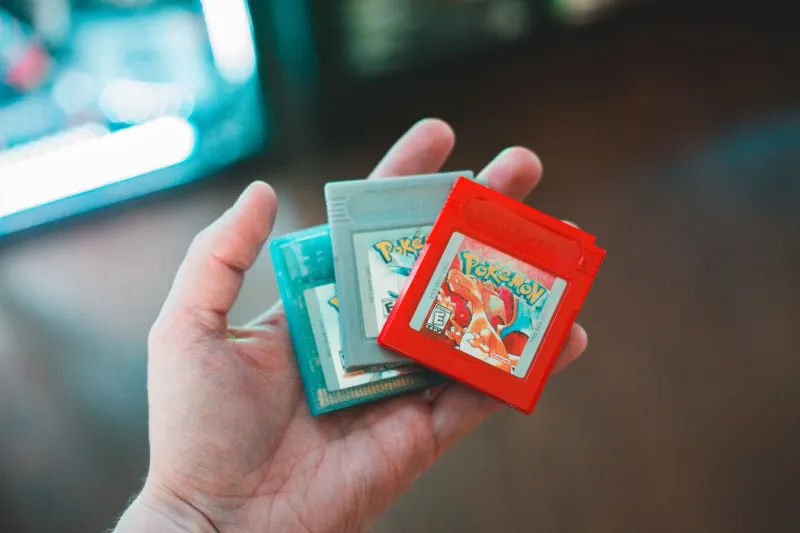
Somewhere in America right now, there are millions of original Game Boys sitting in dresser drawers, storage bins, and cardboard boxes shoved under beds. They're wrapped in nostalgia, maybe tucked next to a copy of Tetris or a beat-up Pokémon Red cartridge, and their owners are operating under a very comfortable assumption: that these things are basically fine. That they'll work when the mood strikes. That the hardware is just... waiting.
Here's the uncomfortable truth nobody talks about at retro gaming meetups: your Game Boy is not fine. It is, in the most literal chemical sense, dying.
The Battery Problem Nobody Warned You About
The original Game Boy launched in 1989 and ran on four AA batteries. Simple, right? The problem isn't the batteries you put in — it's the batteries you forgot to take out. Alkaline batteries left inside electronics for extended periods are basically ticking time bombs of corrosion. The potassium hydroxide they leak when they die doesn't just sit there politely. It eats through battery contacts, creeps into circuit boards, and leaves behind a chalky white residue that looks harmless but absolutely isn't.
If you haven't opened your Game Boy in the last decade, there's a real chance the battery compartment looks like a science experiment gone wrong. And unlike a scratched screen or a sticky button, battery corrosion isn't always a cosmetic issue. If it reaches the board, you're potentially looking at a paperweight.
The cruel irony is that most people stored their Game Boys with batteries inside because that's just what you did in the '90s. Nobody handed you a preservation manual. You were nine.
What Replacement Parts Actually Cost Now
Let's say your battery contacts are corroded but the board survived. Good news — you can fix it. Bad news — the parts market for original Game Boys is getting weird in ways that should concern anyone who considers themselves a collector.
Replacement battery contact sets for the original DMG-01 Game Boy are still available through third-party sellers on sites like eBay and AliExpress, usually running between $3 and $10 depending on quality. That's manageable. But the broader parts ecosystem is thinning out. Screen replacement lenses, speaker components, voltage regulators — the further you go down the repair rabbit hole, the more you're relying on either harvested donor units or increasingly scarce new-old-stock parts.
Original Game Boy screens are particularly tricky. The classic reflective LCD display — the one with the legendary motion blur and the greenish tint that somehow still feels iconic — isn't being manufactured anymore. If yours is cracked or has dead lines running through it, you have two realistic options: source a screen from another broken unit, or install a modern IPS backlit replacement. The IPS route is popular in the modding community, but it's worth noting that it fundamentally changes what you're playing on. Some collectors consider it a restoration. Others consider it a modification that erases part of the artifact's authenticity.
There's no wrong answer, but it's a choice that didn't used to exist.
The Chemistry Nobody Taught Us in School
Here's where things get genuinely fascinating in a slightly depressing way. The Game Boy's internal clock battery — present in certain cartridges like Pokémon Gold and Silver rather than the handheld itself — is a CR2025 or CR2032 coin cell that was designed to last roughly 10 years. Those games came out in 2000 in the US. You do the math.
When that battery dies, your save file doesn't corrupt dramatically. It just... stops existing. You turn on your game and your 200-hour Pokémon file is gone, replaced by an empty save screen. It's not a crash or an error message. It's a quiet erasure. Collectors who've gone years without booting up their cartridges have discovered this the hard way.
Replacing a cartridge save battery is a solvable problem — it requires a gamebit screwdriver, a soldering iron, and about 15 minutes of confidence — but it's not something most people even know they need to do. The clock is running whether you play the game or not.
The Race Against Time Is Already Happening
The retro gaming community has largely adapted to this reality, even if casual collectors haven't caught up yet. YouTube channels dedicated to Game Boy repair have hundreds of thousands of subscribers. Discord servers swap tips on recapping boards and sourcing capacitors. The knowledge is out there.
But there's a meaningful gap between the people who are actively preserving their hardware and the much larger group who are assuming preservation is happening on its own. It isn't. Electrolytic capacitors on older boards dry out over time regardless of use. Rubber membranes under buttons degrade. Plastics yellow and become brittle. A Game Boy that worked perfectly in 1998 and has been stored in a climate-controlled room ever since is still older than most people's marriages. Age doesn't stop just because you put something in a box.
What You Can Actually Do About It
None of this is meant to send you into a panic spiral. These machines are remarkably durable for their age, and plenty of them are still fully functional. But if you care about keeping yours alive — or if you're thinking about picking one up at a garage sale or through an online marketplace — there are some practical steps worth taking.
First, open the battery compartment right now. Seriously. If there are batteries in there, take them out. If there's corrosion, a Q-tip dipped in white vinegar will neutralize the alkaline residue. Let it dry completely before doing anything else.
Second, if you want to actually play your Game Boy rather than just own it, consider a full once-over by a retro repair tech. Sites like RetroFixes and various Etsy sellers specialize in Game Boy restoration, and a clean bill of health from someone who knows what they're looking at is worth the cost.
Third, think about your cartridges separately from your hardware. The save batteries in your games are on their own timeline, and if those files matter to you, there are devices like the GB Operator that let you back up save data to a computer before the coin cell gives out.
The Real Cost of Doing Nothing
The Game Boy is 35 years old. That's not a number that should feel abstract — it means the hardware is older than some of the people currently playing retro games for the first time. The original engineers at Nintendo didn't design these things to last forever because nobody designs anything to last forever. They designed them to survive a kid's backpack, not three and a half decades of entropy.
The choice in front of collectors isn't really about money, though the costs of proper restoration add up. It's about intention. Do you want to own a Game Boy, or do you want to have one? Because right now, a lot of people are choosing the second option by default, and the hardware is making its own choices in response.
Plug it in. Press start. But maybe check the battery compartment first.